A runny nose in a child is one of the most common causes for concern, especially when the child sleeps poorly, is cranky, and refuses to eat. It is important for parents to understand that timely assistance helps to avoid complications and restore well-being more quickly. At the same time, a runny nose can have different causes, which means that the approach to treatment will also differ. In this article, we will look at how to treat a runny nose in a child, which methods really work, and in which situations it is worth consulting a doctor.
Types and causes of runny nose in children
To understand how to treat rhinitis in a child, it is important to determine its origin. The most common options are:
Viral runny nose. The most common. Occurs with ARVI, accompanied by clear mucus, nasal congestion and sneezing.
Bacterial rhinitis. Develops when a bacterial infection joins in. The discharge becomes thick and yellowish-green. Sometimes there is an unpleasant odour.
Allergic rhinitis. It is triggered by dust, animal hair, pollen, and other allergens. It can be seasonal or year-round. It is accompanied by itching, watery eyes, and frequent sneezing. Allergies are often the cause of chronic rhinitis in children.
Runny nose during teething. Infants may experience moderate watery mucus and slight congestion. The symptoms go away on their own.
Understanding the causes of a runny nose in a child will make treatment more accurate and effective.
Treating a runny nose in a child
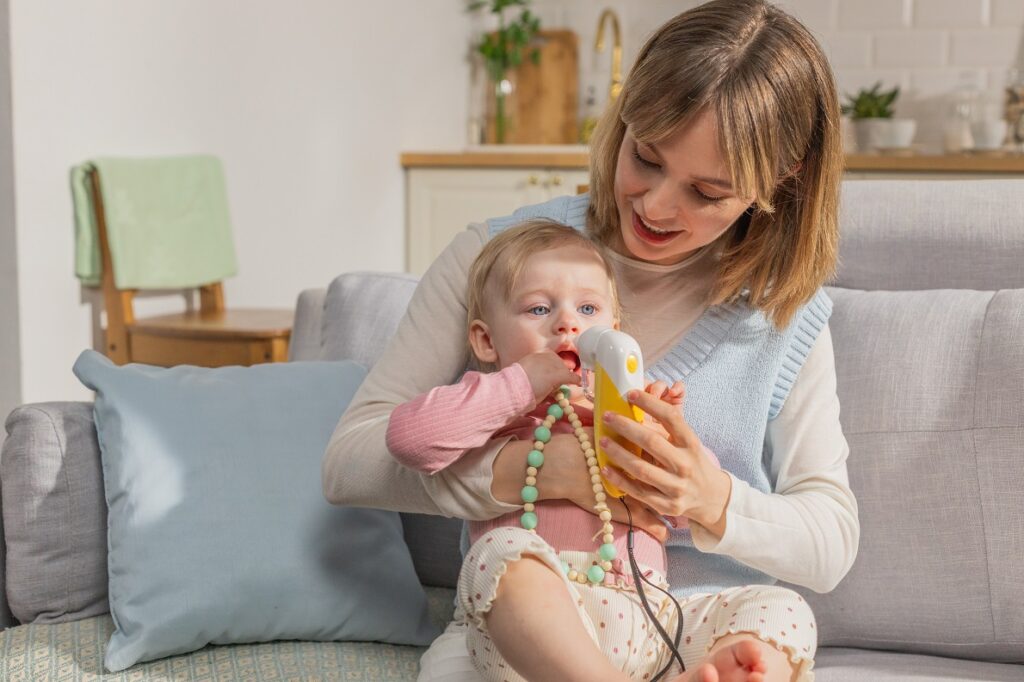
When a baby develops rhinitis, parents first want to understand how to treat a runny nose in a child and how to restore breathing as quickly as possible. There is no universal remedy, but there is a logical sequence of actions that almost always helps.
Below are the main stages of treatment that are safe for children of different ages. These recommendations are suitable for both acute rhinitis in children and mild, prolonged rhinitis.
1. Moisturising and rinsing the nose
The first and essential step is to restore normal moisture to the mucous membrane. When the nose is too dry, there is less mucus, but it becomes thicker and stops coming out naturally. Therefore, using a regular saline solution to rinse the nose is one of the most effective and safest measures.
Rinsing helps to:
thin secretions;
reduce swelling;
ease breathing;
lower the risk of bacterial infection.
Regular nasal rinsing is the basis for treating rhinitis in children for almost any reason.
2. Drops and sprays to ease breathing
After preparing the mucous membrane, you can use medicinal forms:
Nasal drops for children are suitable even for infants — moisturising, vasoconstrictive, hormonal.
Nasal spray for children is only used at an older age because the spray may be too strong for babies.
Vasoconstrictor drops for children should be used strictly as directed by a doctor and for a limited course — they help relieve congestion but do not treat the cause itself.
It is important to remember that no medications should be chosen ‘by eye’. Only correctly selected remedies will help if you are thinking about how to cure a runny nose in a baby without risking their health.
3. Removing mucus is the most important step
Mucus, especially thick mucus, prevents a child from sleeping, eating and feeling comfortable. With a bacterial runny nose or prolonged inflammation, there is a lot of it, and it needs to be removed regularly.
For younger children, it is impossible to clean the nose manually — babies do not know how to blow their nose. Therefore, aspirators are used. They allow you to safely and effectively clean the nasal passages and speed up recovery.
4. The right microclimate in the home
Even the most effective treatment will not work if the air in the child's room is dry. The optimal humidity is 40-60%, and the temperature is 20-22 °C. These conditions reduce inflammation and increase the effectiveness of all other measures.
Runny nose in infants
Rhinitis in infants is particularly severe: the baby cannot breathe through the mouth, sleeps poorly and may refuse to breastfeed. Therefore, it is important to know how to treat a runny nose in an infant so as not to cause harm.
The main rule is no sprays! High pressure from the spray can cause otitis or damage the mucous membrane. Only nose drops are suitable for infants.
After moistening with saline solution, the mucus must be removed. Simple blowing of the nose is not possible for an infant, so aspirators are used. The B.Well WC-150 electric model is designed specifically for babies:
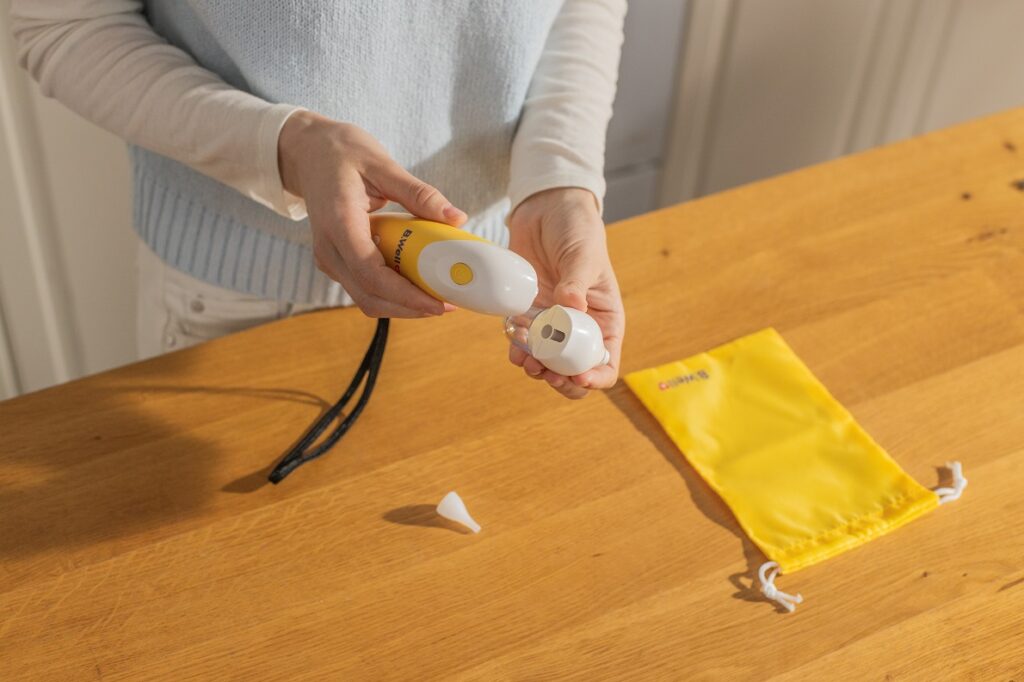
soft silicone tips do not damage the mucous membrane;
52 kPa suction power helps remove both liquid and thick secretions;
a transparent 5 ml reservoir allows you to control the process;
12 melodies distract the child during the procedure;
the device is easy to disassemble and wash, which is important for hygiene.
The WC-150 helps make cleaning comfortable and safe — it is one of the safest treatments for rhinitis in infants, especially when the task is to quickly ease breathing. Thanks to its powerful yet gentle suction, the aspirator is particularly effective if your baby has symptoms of a runny nose or if your young child has a severe runny nose.
When to see a doctor
Sometimes rhinitis goes away quickly, but there are situations when professional intervention is necessary. See a doctor if:
the runny nose lasts more than 7-10 days;
thick discharge with an unpleasant odour appears;
the temperature lasts longer than three days;
the child refuses to eat and becomes lethargic;
breathing is difficult even after clearing the nose;
there are signs of complications, such as earache.
Proper monitoring helps to prevent the disease from developing into a chronic runny nose and to identify the causes of prolonged inflammation in time.

 Global - English
 Germany
 Albania
 France
 Bosnia and Herzegovina
 Austria
 Bulgaria
 Switzerland
 Croatia
 Cyprus
 Denmark
 Estonia
 Finland
 Greece
 Hungary
 Kosovo
 Latvia
 Lithuania
 Macedonia
 Malta
Malta
 Moldova
 Montenegro
 Norway
 Poland
 Romania
 Russia
 Serbia
 Slovenia
 Slowakia
 Spain
Spain
 Sweden
 Ukraine
 Armenia
 Azerbaijan
 Georgia
 Jordan
 Kazakhstan
 Kuwait
 Lebanon
 Malaysia
 Mongolia
 Oman
Oman
 Pakistan
 Qatar
Qatar
 Saudi Arabia
 Sri Lanka
 United Arab Emirates
 Uzbekistan
 Vietnam
 Bolivia
 Colombia
 Algeria (Arabic)
 Egypt
Egypt
 Mauritius
 Morocco
 Nigeria
 Republic of South Africa