Indoor air quality plays a significant role in overall health and daily comfort. One of the most overlooked factors is humidity level. During colder months or in dry climates, indoor air often becomes excessively dry due to heating systems, which can negatively affect both health and living conditions. Research and clinical guidance show that maintaining optimal indoor humidity with a humidifier can offer multiple benefits.
Supporting respiratory comfort
Dry air irritates the mucous membranes of the nose, throat, and airways. This can lead to symptoms such as dryness, coughing, sore throat, and nasal congestion. Adequate humidity helps keep these tissues moist, making breathing more comfortable and supporting the body’s natural defense mechanisms. Balanced humidity is especially important for people prone to colds, allergies, or respiratory sensitivities.
Improving sleep quality
Humidity levels influence nighttime comfort. Dry air may cause throat irritation, nasal dryness, and increased snoring, which can disrupt sleep. Maintaining proper moisture in the air helps reduce these issues and creates a more comfortable sleeping environment. As a result, many people experience more restful and uninterrupted sleep in properly humidified rooms.
Reducing dry skin and irritation
Low humidity accelerates moisture loss from the skin, which can result in dryness, itching, flaking, and irritation. By adding moisture to the air, humidifiers help the skin retain hydration, supporting the natural protective barrier. This benefit is particularly noticeable during winter, when indoor heating significantly lowers humidity levels.
Relieving sinus discomfort and nosebleeds
Dry air can cause inflammation and cracking of the nasal passages, increasing the likelihood of sinus discomfort and nosebleeds. Moist air helps keep nasal tissues hydrated, reducing irritation and supporting sinus comfort. This is especially helpful for children and older adults, who are often more sensitive to dry environments.
Supporting immune health
Scientific studies suggest that many respiratory viruses survive longer and spread more easily in dry air. Maintaining indoor humidity levels above approximately 40% may reduce the stability of virus particles in the air, potentially lowering transmission risk. While humidifiers are not a replacement for medical prevention, they can be a supportive measure for healthier indoor environments.
Protecting the home environment
Dry air does not only affect people—it also impacts the home itself. Wooden furniture, flooring, musical instruments, and indoor plants can suffer from cracking, warping, or stress when humidity levels are too low. Proper humidification helps preserve materials and contributes to a more balanced indoor ecosystem.
Enhancing overall comfort
Humid air often feels warmer than dry air at the same temperature. This can improve overall comfort during colder months and may reduce the need for excessive heating. A well-humidified home simply feels more pleasant and easier to live in.
Recommended humidity levels
Experts generally recommend maintaining indoor humidity between 30% and 50%. Levels below this range may cause dryness and discomfort, while excessively high humidity can promote mold growth and dust mites. Using a hygrometer alongside a humidifier helps ensure optimal balance.
Proper use and maintenance
To maximize benefits and avoid potential risks, humidifiers should be cleaned regularly and used according to manufacturer guidelines. Using clean or distilled water and monitoring humidity levels are essential steps for safe and effective operation.
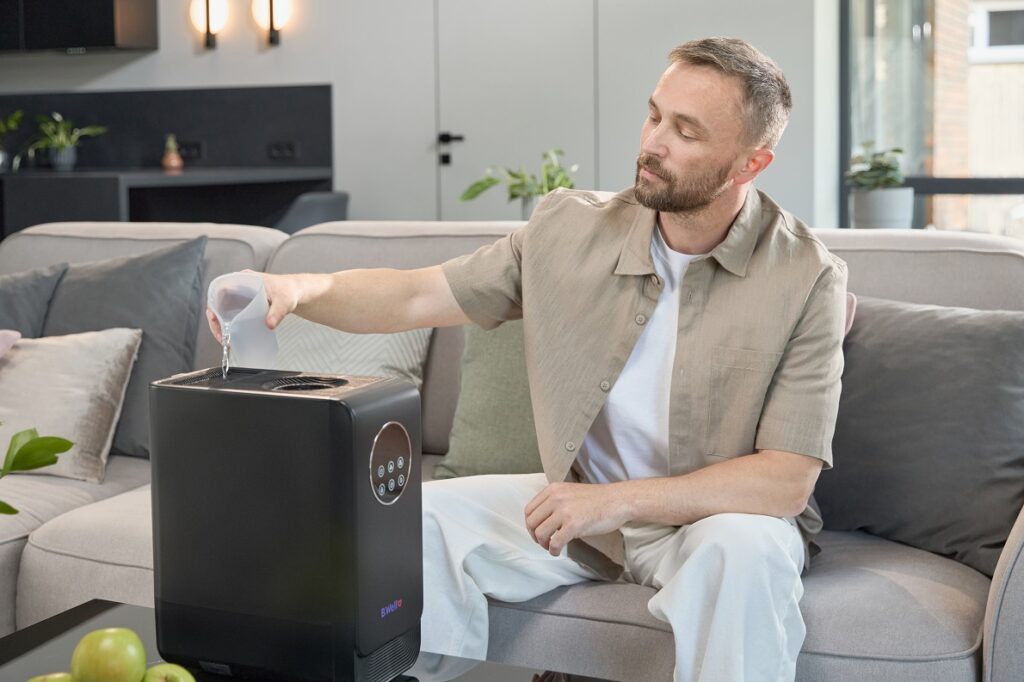
The B.Well MED-14 humidifier is designed for effortless comfort and smart control. An intuitive LED touch screen allows easy adjustment, while three mist levels, Auto Mode (30–90% humidity), Sleep Mode, and Warm or Cool Mist options provide personalized humidity throughout the day and night.
An integrated aroma box lets you enjoy your favourite essential oils for a fresher, more relaxing atmosphere. Built-in automatic shut-off ensures safe operation when water is low or a timer ends, while automatic ionization helps reduce airborne particles for cleaner indoor air.

 Global - English
 Germany
 Albania
 France
 Bosnia and Herzegovina
 Austria
 Bulgaria
 Switzerland
 Croatia
 Cyprus
 Denmark
 Estonia
 Finland
 Greece
 Hungary
 Kosovo
 Latvia
 Lithuania
 Macedonia
 Malta
Malta
 Moldova
 Montenegro
 Norway
 Poland
 Romania
 Russia
 Serbia
 Slovenia
 Slowakia
 Spain
Spain
 Sweden
 Ukraine
 Armenia
 Azerbaijan
 Georgia
 Jordan
 Kazakhstan
 Kuwait
 Lebanon
 Malaysia
 Mongolia
 Oman
Oman
 Pakistan
 Qatar
Qatar
 Saudi Arabia
 Sri Lanka
 United Arab Emirates
 Uzbekistan
 Vietnam
 Bolivia
 Colombia
 Algeria (Arabic)
 Egypt
Egypt
 Mauritius
 Morocco
 Nigeria
 Republic of South Africa